The Battery Workforce Gap Won't Be Closed by the Programs That Work Best
Start with the demand side, because it is stark. In the Center for Automotive Research’s battery industry workforce assessment, conducted with Argonne National Laboratory and the Department of Energy, 82% of surveyed employers reported shortages of skilled local applicants, with engineers and technicians in shortest supply. The same assessment anticipates a six-fold increase in domestic battery workforce demand by 2030. Estimates put the need at roughly 200,000 new jobs across the domestic battery supply chain by the end of the decade. Zoom out to engineering broadly and the picture holds: by some industry estimates, about a third of new engineering roles go unfilled.
Now the supply side, where one number should reframe the entire conversation. Michigan created a tuition grant program for EV and battery technician training with a goal of 2,000 students. Enrollment reached about 220.
Read that again. The money was on the table. The jobs were forecast. The students did not come.
You cannot subsidize your way to a workforce. Students do not show up for a credential. They show up for a mission and a machine.
The model that works
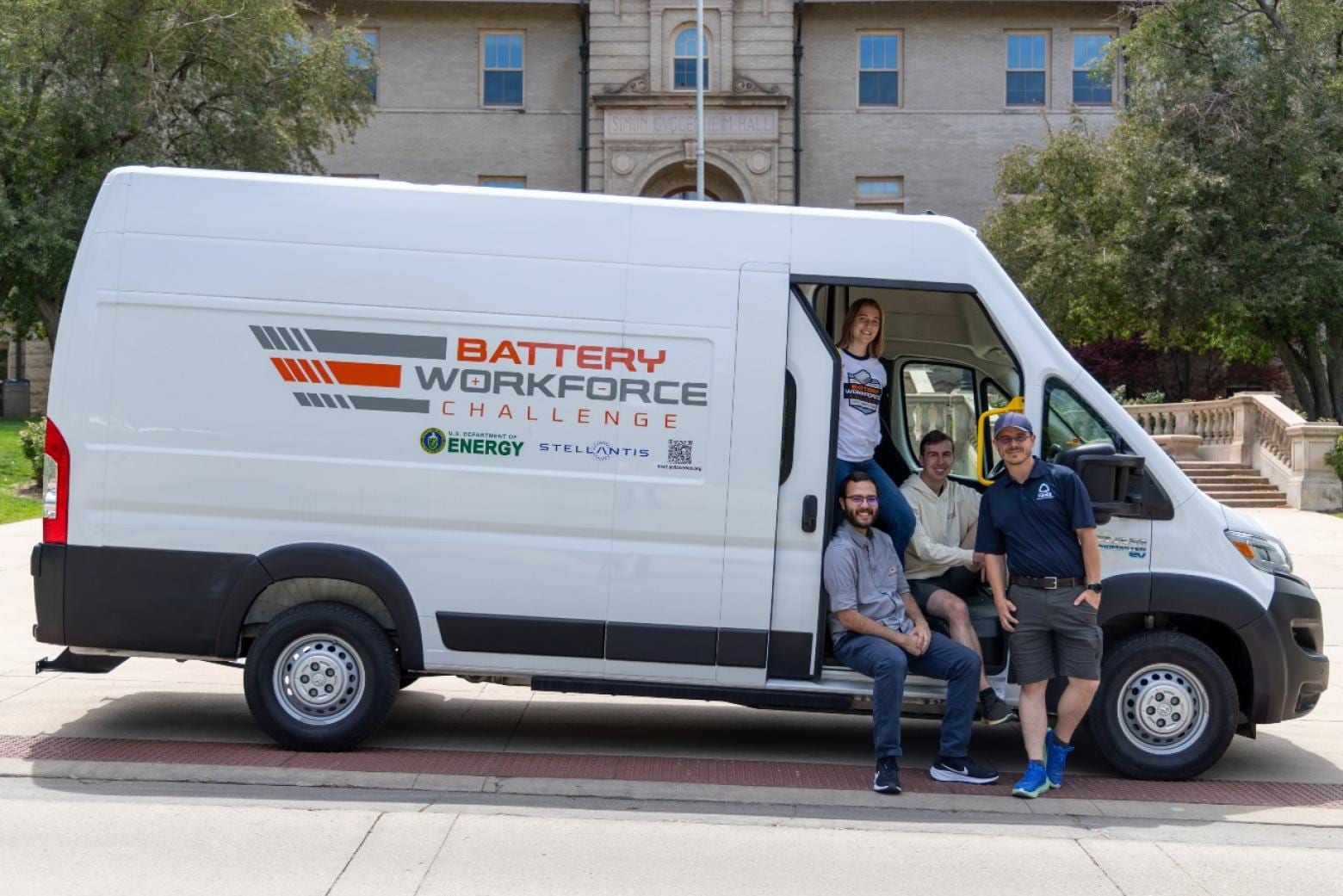
I co-lead Colorado School of Mines’ teams in two of the Department of Energy’s Advanced Vehicle Technology Competitions: the Battery Workforce Challenge and, beginning this fall, the EcoCAR Innovation Challenge. The AVTC series has run in various forms for over three decades, and the model has barely changed because it has barely needed to. Students own a real battery pack and a real vehicle for multiple years. They are mentored by practicing industry engineers. Their deadlines have consequences, because a competition scores you whether or not the semester was busy.
What I watch happen over that arc is not training. Training implies transferring a defined skill set. This is something closer to professional formation. Students learn to make engineering decisions with incomplete information, defend them to industry judges, fail in public, and recover. Our team’s first-place national finish in the Battery Workforce Challenge’s inaugural year was a proud moment, but the outcome I optimize for is quieter: these students graduate having already done the job. Employers know it. The hiring happens before the confetti.
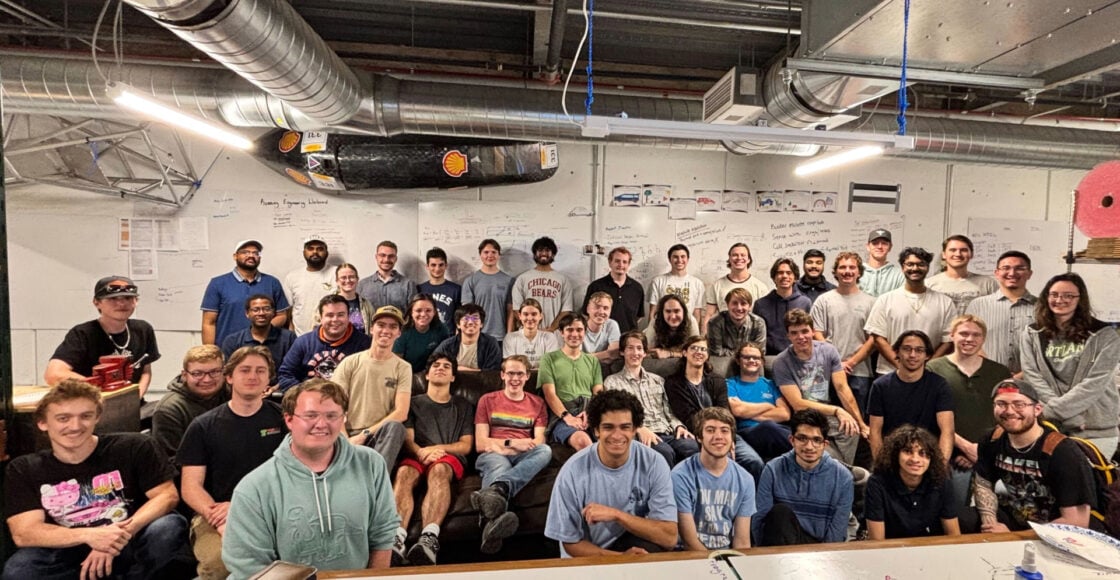 The mission and the machine: the Mines team in the shop, Fall 2025.
None of this is a secret. Ask any employer who has hired from a competition team. Ask DOE, which keeps funding the series. The model is proven, documented, and decades old.
So why doesn’t it scale?
Here is where the workforce conversation usually goes wrong. It assumes the constraint is money or program design, so it proposes new funding and new programs. But the AVTC model reaches perhaps a few thousand students a year nationally, against a gap measured in the hundreds of thousands, and the binding constraint is neither money nor design.
It is faculty incentives.
Experiential programs at this depth require faculty who will supervise real hardware, manage industry relationships, chase sponsorships, and absorb the thousand logistical emergencies of a multi-year build. At most universities, that work is structurally invisible. It carries no teaching credit. It counts little toward promotion. It happens on top of a full load, sustained by the personal commitment of whoever was foolish enough to volunteer. I say this with affection and from experience: the national infrastructure for this kind of education runs substantially on donated faculty labor.
The result is predictable. The people best positioned to scale the proven model are institutionally penalized for doing so, and every program is one burned-out faculty champion away from collapse. We have built an education system that rewards teaching about engineering more than supervising the practice of it, and then we express surprise that practice-based programs do not scale.
Fix the incentives and the pipeline fixes itself
If I could redirect one dollar of workforce funding, it would not go to another training program hoping students enroll. It would go toward making experiential program leadership legible inside universities: workload credit that reflects actual hours, promotion criteria that count program building as scholarship, and directorship structures with real budgets instead of honorary titles. I have been developing a workload instrument along exactly these lines with colleagues, because you cannot manage what your institution refuses to measure.
The students are not the problem; when the machine and the mission are real, they fight to join. The employers are not the problem; they hire these graduates on sight. The model is not the problem; it has three decades of receipts. The problem is that we treat the model’s operating cost, faculty time and career risk, as free.
It is not free. We have simply been sending the bill to individual faculty members and calling the unpaid balance passion. That works until it doesn’t, and at the scale of a 200,000-job gap, it doesn’t.
Discuss this essay
If this resonated, contradicted your experience, or you want to talk about something related, email me directly. I read everything.
Email Me