What the GCxN $1.048B Portfolio Actually Taught Me About Running an Accelerator
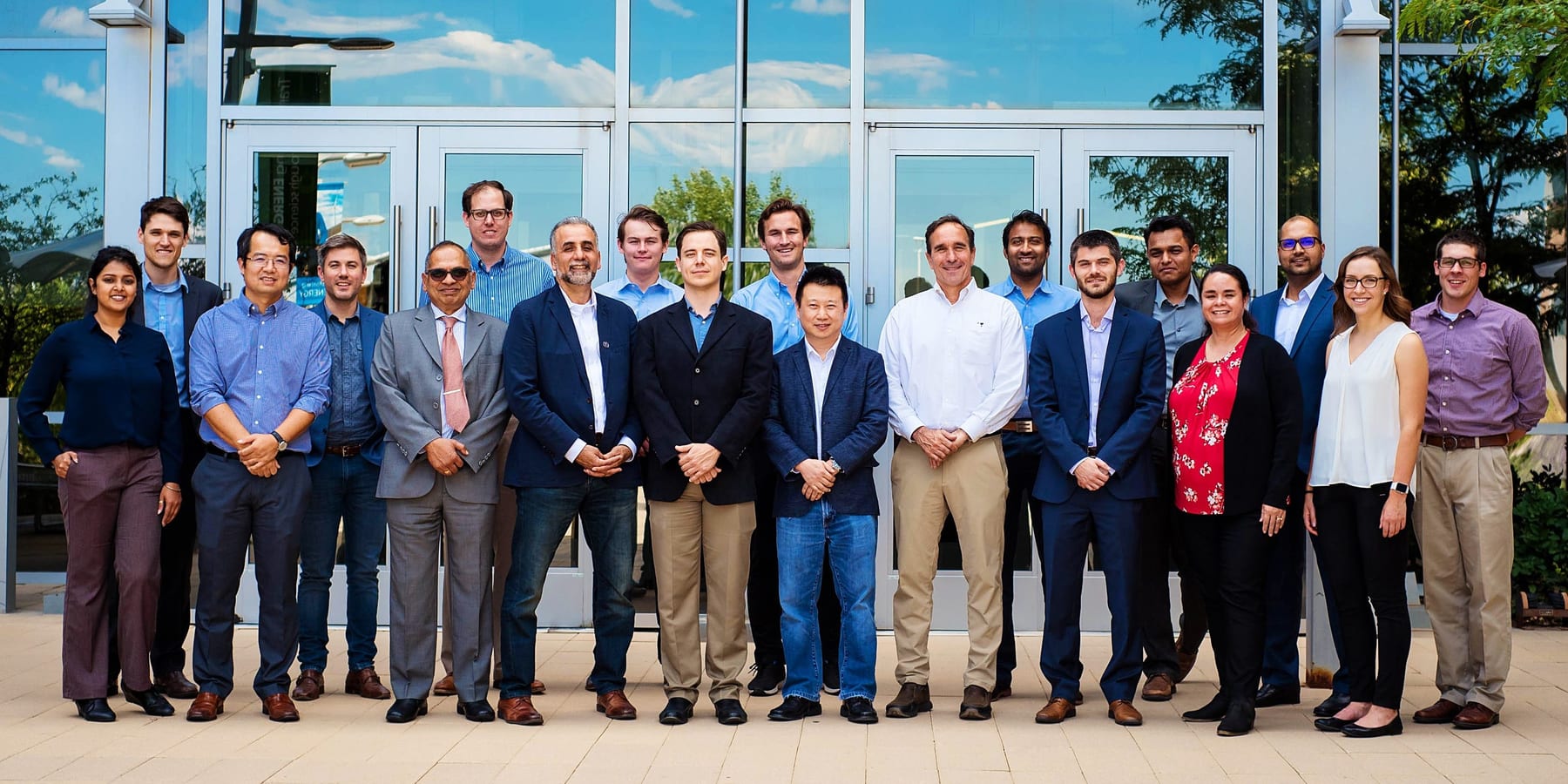
In 2018 I co-founded the Shell GameChanger Accelerator Powered by NREL, working closely with my counterpart at Shell to direct the program and shape the vision and annual program targets. We called it GCxN. The program was a multimillion-dollar, multi-year partnership between Shell International and the National Renewable Energy Laboratory designed to advance early-stage cleantech startups by giving them access to NREL’s facilities, technical experts, and the de-risking infrastructure of a national lab.
According to the GCxN Year in Review 2025 Annual Report, the portfolio companies have now raised $1.048 billion cumulatively. The program has logged 954 new startup hires since its founding (374% growth since 2022), achieved a $140:1 leverage ratio on Shell project funding, and grown to 30 portfolio companies. The first GCxN portfolio company (eXoZymes, formerly Invizyne) launched an IPO. Shell renewed its multi-year funding commitment.
I left the program in 2020 to take other work. The fact that the numbers are larger now than when I was there is not a reflection of my contribution; it is a reflection of the model. Here is what the model got right.
What the model got right
1. The non-dilutive structure removed the wrong incentives
GCxN gave selected startups up to $250,000 worth of access to NREL technical experts and facilities. We did not take equity. We did not write checks. The companies kept all of their cap table to themselves.
This sounds like leaving money on the table. It is not. By removing the equity question, we removed the entire negotiation that consumes most accelerator-startup interactions. The first conversation was not about valuation. It was about the technical work. Companies self-selected for those who wanted national lab capabilities, not those chasing the next round.
If you are designing a program inside a public institution, do not try to invent an equity structure. The institution cannot move at venture speed and will get the structure wrong. Give your participants the most valuable thing the institution has (in our case, scientific instrumentation and PhD-level expertise) and let them keep their equity.
2. We built an ecosystem of Channel Partners, not a brand
Most accelerators try to be the destination. They run their own application process, build their own brand recognition, and compete with every other accelerator for deal flow. We did the opposite. We built relationships with incubators, university tech transfer offices, and other accelerators (collectively our Channel Partners), and asked them to refer companies they were already working with. The Channel Partners benefited because GCxN was not a competitor; we did not take equity or relationship rights. They got to send their best companies to a national lab and look like heroes. We got high-quality deal flow without paying for it.
The 2025 program has expanded this further with Channel Partner Strategic Awards and a new Worldwide Innovation Network. The principle is the same: be a layer in the ecosystem, not a competitor for it.
3. Shell brought commercial reality, NREL brought technical reality
The partnership structure mattered more than any individual hire. Shell’s involvement meant every technical conversation eventually grounded in commercial questions: cost at scale, integration into existing infrastructure, customer behavior. NREL’s involvement meant every commercial pitch eventually grounded in physics: yield, efficiency, lifetime, manufacturability. A startup pitch that survived both kinds of scrutiny was a meaningfully different artifact from a startup pitch that had only survived demo days.
This is the real value. Accelerators that do not have this kind of dual-perspective structure tend to drift toward whichever side has more cultural capital (usually the commercial side, which produces optimistic pitches that fall apart in the lab) or technical isolation (which produces fascinating papers and unfundable companies).
What we got wrong
1. We underestimated how long it takes to see returns
The 2025 numbers ($1B+ raised, 954 hires) look great. They are great. But they took seven years to materialize. In year three, when I was still running the program, the numbers were modest. We had a few graduations, a few raises, no IPOs, and a portfolio that looked promising but unproven. If we had been on a typical venture timeline, we would have been declared a failure.
National lab accelerators have to be funded with a multi-year horizon by partners who do not need quarterly proof points. That is a strategic choice that has to happen at the partnership level, not the program level. Nobody can run a cleantech accelerator on a two-year timeline and expect signal.
2. The “national lab cachet” cuts both ways
For early conversations with startups and investors, the NREL brand was a massive asset. It opened doors. It gave companies a credible third-party validator for their technology claims. It made it easy for Shell to participate without it looking like a corporate program.
For internal national lab politics, the same cachet was a liability. Other groups at NREL sometimes saw GCxN as a threat to their own industry partnership work. Some Shell technical groups initially viewed the program as a lab-led activity that bypassed normal Shell channels. Maintaining the partnership required constant work on relationships that were not part of the formal program structure.
If I had to do it again, I would invest more time in the first six months on internal lab relationships and Shell channel relationships, even at the cost of slower progress on cohort-facing work.
3. We did not build enough alumni infrastructure
By the time I left in 2020, GCxN had graduated several promising companies. We did not have a structured alumni program. The relationships persisted because individual NREL technical staff stayed in touch with companies they worked with directly. Institutionally, we were not capturing those relationships.
This matters because the value of an accelerator compounds through alumni. When a graduated company succeeds, it brings credibility back to the program, attracts the next cohort, and (sometimes) co-invests in the next generation of companies. Without an alumni program, that compounding does not happen.
The current GCxN team has built more of this infrastructure since I left, and the 2025 results reflect it.
What I would tell anyone starting an accelerator inside a public institution
- Find the most valuable thing your institution has. Not the thing you want it to have. The actual rare resource. Then give that to participants.
- Do not take equity. It will misalign incentives and slow every conversation.
- Build with Channel Partners, not against them. You are a layer, not a brand.
- Pair commercial reality with technical reality from day one. Either alone produces unhelpful artifacts.
- Plan for a seven-year horizon. Anything shorter is not really an accelerator.
- Build alumni infrastructure before you have alumni. It will not get easier later.
The GCxN model worked because it made strategic choices that look conservative on the surface (no equity, no brand-building, no quarterly returns) and aggressive underneath (national lab access, dual-perspective evaluation, multi-year commitment). The $1B portfolio is a delayed receipt for choices made in 2018.
If you are thinking about something similar, I am happy to talk about what worked and what did not. The program is not done teaching me lessons.
Discuss this essay
If this resonated, contradicted your experience, or you want to talk about something related, email me directly. I read everything.
Email Me