Adopting Open Course Materials: A Practical Guide for Engineering Faculty
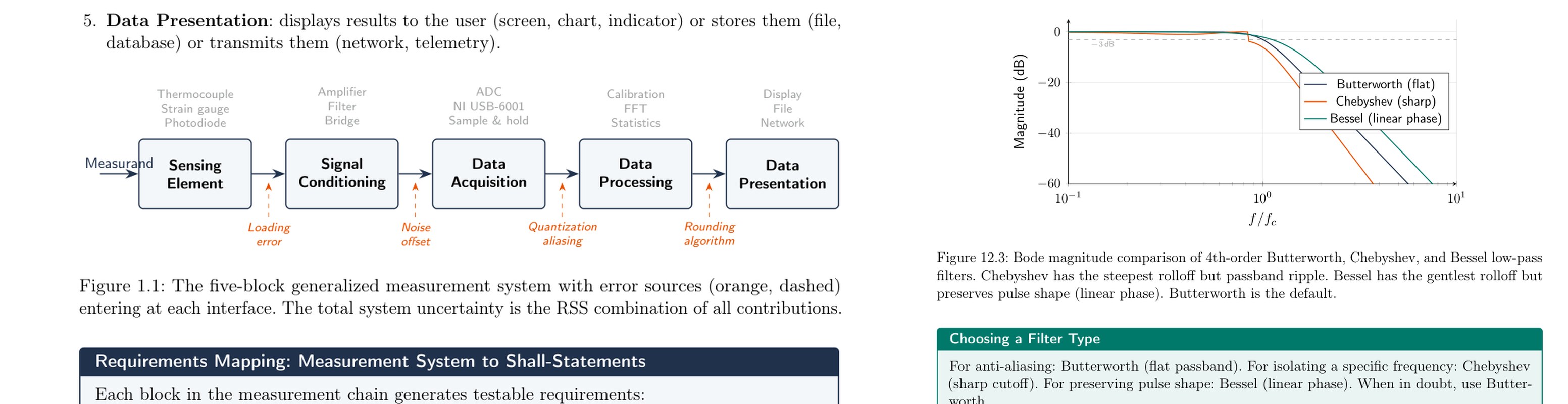
I publish open course materials for the courses I teach. The current set:
- MEGN 300 Instrumentation & Automation (Student Guide + 23-chapter Master Reference Document)
- MEGN 301 Mechanical Integration & Design (Student Guide + Master Reference Document)
- EDS 491/492 Senior Capstone Design (Student Guide + PA Instructor Guide + 200+ page course text)
All three are licensed under Creative Commons Attribution 4.0 (CC BY 4.0). You can use them, modify them, and republish your modified versions, including commercially, as long as you cite me.
Every semester at conferences, faculty ask me how I would recommend they adopt open materials in their own courses. The conversation usually ends with a vague “I will look at it next break.” A few of those faculty actually do look. Most do not. The reasons most do not are real and are worth addressing.
Here is the short version of what works.
What stops faculty from adopting open materials
The unspoken reason is that adopting any new course material, open or not, is real work. The work falls into three buckets:
- Reading the material to see if it fits. Time cost: hours per chapter.
- Adapting the material to your course’s context. Time cost: weeks across a semester.
- Building the operational scaffolding. Reading lists, problem sets, exam questions, lab protocols. Time cost: more weeks.
If your university’s adoption process treats open materials the same as a textbook (you adopt or you do not), then bucket one alone is a reason most faculty pass. Reading 400 pages of someone else’s material on speculation is not a reasonable ask.
The way to make adoption realistic is to break it into pieces small enough that any individual piece is worth trying.
The minimum viable adoption
If you teach a course adjacent to MEGN 300 or 301, here is the smallest possible thing you can do this semester.
1. Pick one chapter
Pick one chapter from the open material that maps to one week of your course. For MEGN 300, that might be Chapter 4 (Error Analysis and Uncertainty) or Chapter 12 (Analog Filter Design). For MEGN 301, it might be a specific design phase. For Capstone, it might be the Critical Design Review preparation chapter.
Read that one chapter. Decide whether it would replace, supplement, or complement what you already do for that week.
2. Use it once, before deciding to commit
Assign that one chapter as supplementary reading for one week. Tell students it is a different perspective on the same material you already cover. Ask them at the end of the week whether the chapter helped, hurt, or was neutral.
This is a low-stakes experiment. If the chapter helps, you have evidence to use more. If it does not, you have learned something useful with a week of effort, not a semester.
3. Keep the operational scaffolding you already have
The hardest mistake faculty make when adopting any new material is throwing out their problem sets, exam questions, and rubrics in favor of starting fresh. Do not do this. Your operational scaffolding is the result of years of iteration. Use the new material as content; keep your scaffolding.
The course materials I publish are designed to be used this way. The Master Reference Documents are content-heavy. They do not include exam questions or graded assignments. That is intentional. Your assignments and exams should reflect your context, your students, and what you want them to be able to do.
When to adopt more aggressively
The minimum viable adoption pattern works well for one chapter at a time. There are situations where a more aggressive adoption makes sense:
You are teaching a brand new course
If you are launching a course from scratch, the cost of reading 400 pages of someone else’s material is dwarfed by the cost of writing 400 pages of your own. Adopt aggressively. Modify as you teach.
Your existing materials are demonstrably not working
If student evaluations or learning outcome data tell you the current material is failing, the bar for trying something new drops. Adoption is a controlled experiment, not a permanent commitment.
You have a course coordinator role
If you coordinate a multi-section course, the question extends beyond whether the material works for you to whether colleagues with different teaching styles can use it. Open materials are easier to coordinate around than commercial textbooks because everyone can modify them.
This was my situation as MEGN 300 Course Coordinator in Spring 2025. Mentoring new instructors Elijah Kuska and Siby Thomas was easier because we could agree on a baseline reference document and let each instructor decide how to use it in their section.
Why CC BY 4.0 specifically
I license under CC BY 4.0 (rather than CC BY-NC, CC BY-SA, or other variants) for two reasons.
First, the NC restriction (non-commercial) creates more friction than it removes. Many faculty work at institutions where any course material is technically commercial in the sense that students pay tuition. The NC restriction creates legal ambiguity for adopters.
Second, the SA restriction (share-alike, requiring derivative works to use the same license) discourages adoption by faculty who are not sure how their version will eventually be used.
CC BY 4.0 just requires attribution. That is the only thing I care about: that adopters cite the source.
What I ask from adopters
If you adopt any of the materials, I have three small asks:
-
Tell me. Email me at aduran@mines.edu. I want to know which materials are being used, in what courses, at what institutions. This is partly so I can improve the materials based on feedback, and partly so I can talk about adoption when external reviewers ask.
-
Cite the source. A line in your syllabus that says “Portions of this course use materials by Adam W. Duran, Colorado School of Mines, used under CC BY 4.0” is sufficient.
-
Send back changes that helped. If you modified a chapter and the modified version worked better, send the modification back. Other adopters benefit. This is how open materials compound in value.
What is coming
I am working on additional materials for MEGN 417/527 (Vehicle Dynamics and Powertrain Systems), MEGN 455 (Aerospace Systems Engineering), and MEGN 456 (Space Operations and Mission Design). These will publish under the same license. If you teach an adjacent course and want to talk about what would make the materials most useful, reach out.
Open course materials are a lever for the entire engineering education community, but only if faculty adopt them. The rest of this essay is just an argument for making the smallest possible first step.
Discuss this essay
If this resonated, contradicted your experience, or you want to talk about something related, email me directly. I read everything.
Email Me