Winning the Inaugural DOE Battery Workforce Challenge: A Postmortem
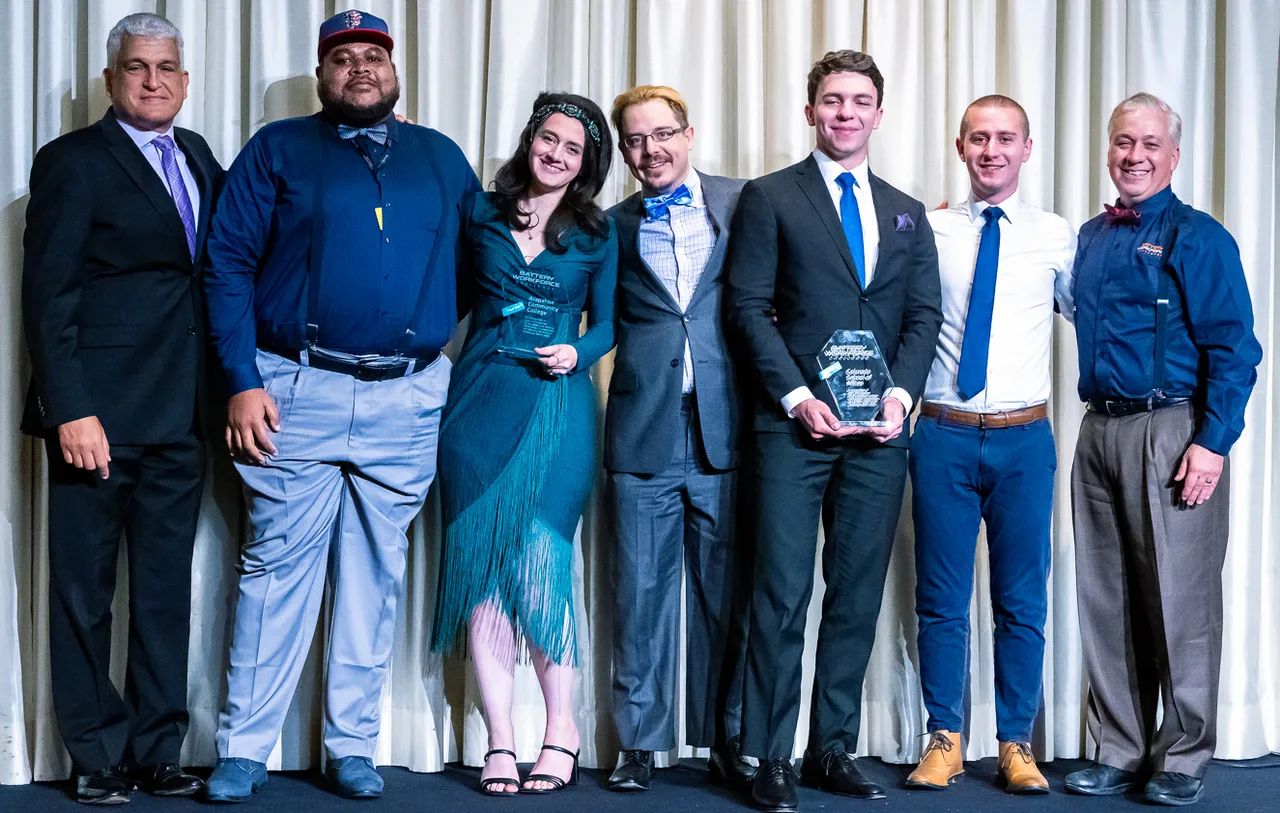
In May 2024, the Mines/Arapahoe Community College team won the inaugural DOE Battery Workforce Challenge, beating Ohio State, the University of Alabama, and nine other collegiate teams. Year 2 (2024-25), we finished 4th nationally with a stronger team and a more mature project.
I have been asked frequently what we did differently. The honest answer is that the standings tell less of the story than people think. Here is the postmortem.
The setup
The Battery Workforce Challenge (BWC) is a three-year DOE/Stellantis-sponsored competition where collegiate teams design, build, test, and integrate an advanced EV battery into a future Stellantis vehicle. Twelve teams compete each year. The competition combines engineering deliverables (battery pack design, cell-level analysis, thermal modeling), project management deliverables (Gantt charts, risk registers, gate reviews), and a physical build that has to pass safety inspection and competition driving events.
Mines paired with Arapahoe Community College, which is structurally important. ACC contributed automotive technology students alongside our engineering students and shared their facilities and expertise in vehicle servicing and maintenance. The team learned to operate as a real cross-functional industrial team, not a single-school engineering club.
The faculty side was Prof. Polina Brodsky and me, both serving as co-PIs. Total program value across three years was $255,100 (DOE/Stellantis base grant, Chevron sponsorship, student travel stipends, competition prizes).
What worked in Year 1
1. We picked five students and let them run
The Year 1 leadership team was small. Five students, two graduate and three undergraduate, all of whom had to commit a full year to the project. We did not try to scale the team to “give everyone a chance.” The students who joined committed to weekly meetings, biweekly deliverables, and competition travel without being chased.
Smaller, accountable teams beat larger, dispersed teams in time-boxed competitions. This is a structural finding, not a cultural one. The BWC deliverable cadence assumes a small team that owns full deliverables. A team of 25 students dividing work into 25 pieces does not produce a coherent battery pack design; it produces 25 disconnected work packets.
2. We separated technical risk from project management risk
Polina and I divided faculty advising along a clean line. She owned the technical-risk register (cell selection, thermal modeling, safety review). I owned the project-management-risk register (deliverable schedule, travel logistics, budget). When the team ran into a problem, they knew which faculty member to bring it to. We did not duplicate effort.
This sounds obvious. It is not how most faculty teams operate. Most faculty co-advisors collapse into a “we both look at everything” model that produces slower decisions and unclear ownership.
3. We treated the cross-school partnership as a feature, not a hassle
Working with ACC required building relationships at a different institution with different cultures, schedules, and assessment expectations. We invested time in those relationships from day one. The ACC students were not “subcontractors” on the automotive technology side; they were full team members with full decision authority on servicing, maintenance, and build questions. When their faculty advisor Jeff Tipsword made a call, it stuck.
Cross-institutional teams are usually weaker than single-institution teams because of the operational tax. We made it work because we treated ACC as a peer institution with distinct expertise, not a junior partner.
4. We mentored hard and held the bar high
A piece of conventional faculty wisdom is to step back and let student teams find their own pace, up to and including missing intermediate gates. We did not do that. When a deliverable looked at risk, we stepped in early with close mentorship, honest feedback, and coaching, and we worked with the team to make sure each milestone landed on time and at the expected quality level. Nothing slipped.
The result was exceptional student performance. The team learned fast because the expectations were clear, the feedback was immediate, and the support was there when they needed it. High expectations coupled with high support is not a soft version of faculty mentoring; it is the version that produces winning competition teams.
What was different in Year 2
Year 2 produced a stronger technical artifact and a 4th-place finish. Three things contributed.
1. The team grew
We expanded from five students to about twelve. Some of the operational efficiency we had in Year 1 was lost. Communication overhead grew faster than productive output. This is not always avoidable (multi-year competitions inherit team members from prior years) but it is real.
2. The competition got harder
Other teams learned from Year 1. Ohio State in particular came back significantly stronger. Our absolute performance improved; our relative ranking dropped. Both things are true and both matter.
3. Paper-to-product transitions caught us
Year 2 was our first time competing at scale in a multi-year DOE competition like BWC, and that inexperience showed up most acutely in the transition from design to build. Decisions that looked clean on paper ran into fabrication, integration, and testing realities that slowed us down. Some of that is unavoidable in any first cycle at this scale; some of it we will catch earlier next time with more build-side rehearsal before the design freeze.
The 4th-place finish is, in many ways, a more honest reflection of where we are as a program than the 1st-place finish was. First place required a confluence of small team, fresh problem, and competitor inexperience. Fourth place came from a normalized field where we are competing on sustained execution.
What this means for other faculty considering BWC or similar
If you are thinking about taking on a multi-year DOE Advanced Vehicle Technology Competition (AVTC) program, here is what I would tell you:
- Start small. The temptation to give 30 students “a chance” will produce worse outcomes for everyone.
- Divide faculty advising along a clean line. Decide who owns technical risk and who owns operational risk before the year starts.
- Partner with a different kind of institution. A peer engineering school is less valuable than a partner with complementary expertise (community college, design school, business school).
- Mentor hard and hold the bar high. Hands-on mentorship, clear high expectations, and immediate feedback produce exceptional student performance. Do not step back and assume the team will calibrate on its own.
- Plan for relative ranking to drop in Year 2. Other teams learn. Be prepared for stakeholders who treat 1st place as the floor.
The full BWC program value at Mines was $258,100 across three years, plus significant in-kind value from software (GT-Suite, Siemens), hardware (Analog Devices, Dana), and a vehicle donation from Stellantis (Dodge RAM ProMaster Van). As we head into BWC Year 3, we are looking at what comes next. The same lessons will apply.
If you are running or considering an AVTC program, reach out. I am happy to share the project plans, gate review templates, and budget structures we use.
Discuss this essay
If this resonated, contradicted your experience, or you want to talk about something related, email me directly. I read everything.
Email Me