SBIR Phase I as a Course Assignment Format
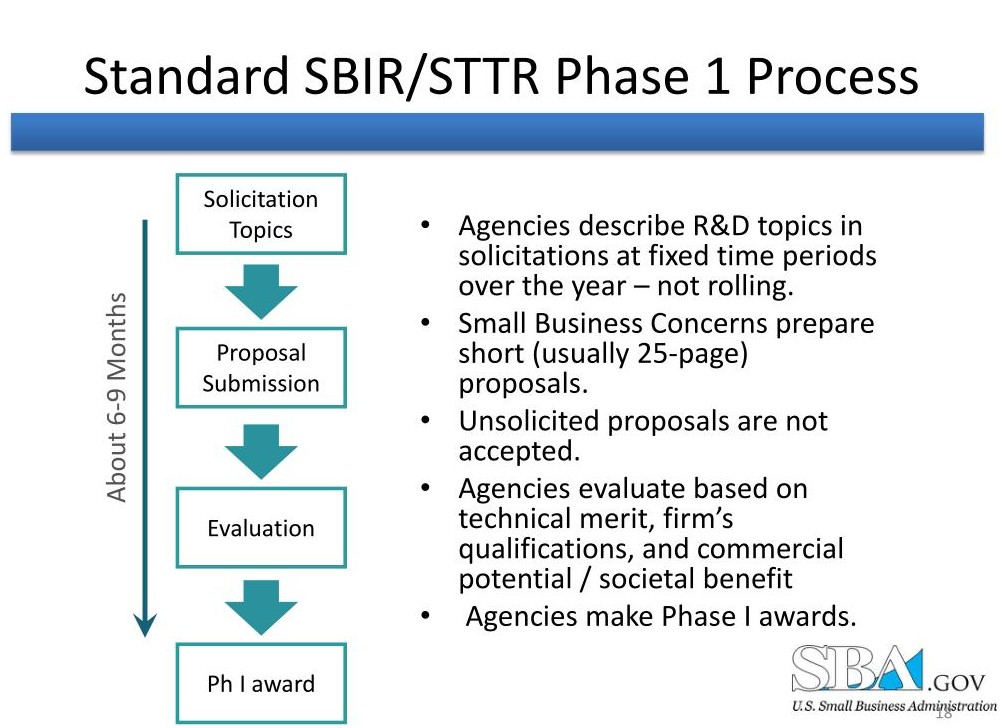
I have a particular strong feeling about how engineering students learn to write. Most engineering courses ask students to produce reports for an audience that does not exist. The TA reads the report. The grader returns the report. The student produces another report next semester for the same imaginary audience. By graduation, the student has written perhaps a dozen technical artifacts, none of which would survive contact with a real reader.
In MEGN 455, my Aerospace Systems Engineering course, the semester project is a Small Business Innovation Research (SBIR) Phase I-inspired white paper. The format mirrors the structure of an actual federal proposal submission. I did not invent this. I co-developed the course with Prof. Jennifer Erickson (Lockheed Martin / Mines Lecturer), and the assignment design borrows heavily from how SBIR Phase I solicitations are structured by NASA, DoD, and DOE.
This essay is a quick description of the assignment, why it works, and how other faculty might adapt it.
The assignment
Students choose a real published federal SBIR or government research solicitation. They form teams of three to four. Over the semester, each team writes a 2-page white paper that mirrors the structure of an SBIR Phase I proposal, including:
- A clearly framed problem statement that maps to the solicitation language
- Initial market research and stakeholder identification
- Preliminary technical constraints and risks
- A high-level technical concept that responds to the stated need
- A notional team and qualifications statement
The page limit is real. The structure is real. The solicitation deadlines are real. Students can choose to submit if they want, though most do not.
Underneath the white paper is a substantial body of intermediate work that students produce as part of the course’s MBSE workflow:
- Concept of Operations (ConOps)
- System requirements diagrams
- N-squared interface diagram
- Integrated Master Schedule (IMS) and Work Breakdown Structure (WBS)
- Risk register with quantified risk scores
- A final 70-page System Solution Report
The white paper is the externally-facing artifact. The 70-page report is the internal technical work that backs it up. In real federal proposals, this is exactly how the artifacts relate: the externally-visible proposal is the tip of an iceberg of internal technical material.
Why it works
1. The audience is real
Students are writing for a fictional but credible federal program manager. The page limit is enforced. The structure is constrained by the solicitation. Students who try to write the way they have written every other engineering report (long, comprehensive, heavily defensive) discover that the artifact will not fit in the page budget.
This forces a real writing skill that engineering students rarely develop: choosing what not to write. SBIR Phase I proposals do not include every interesting technical detail. They include exactly the details a reviewer needs to decide whether to award. The students learn to distinguish between writing for self-reassurance and writing for a decision-maker.
2. The structure mirrors how engineering work actually gets justified
Students learn that the technical concept does not stand alone. It has to be tied to a problem the funder cares about, with stakeholders identified, with risks named explicitly, with a credible team behind it. Most engineering courses teach the technical concept in isolation. The SBIR format teaches the technical concept embedded in the institutional context where it would be funded.
By the end of the semester, a student who has written three or four iterations of an SBIR-format white paper has internalized a question that they will use for the rest of their career: “What does this funder actually need to see to write a check?“
3. It scales to teams and to assessment
The 2-page constraint forces team-level negotiation about what gets included. The intermediate deliverables (ConOps, requirements, risk register) provide assessable artifacts at every gate. The final 70-page System Solution Report gives me as the instructor a way to evaluate whether the team’s white paper is backed by real technical depth or is simply well-written.
I can grade the white paper for proposal craft (page constraint, clarity, structure) and the System Solution Report for technical depth, separately. The two grades together tell me whether a team has both halves of the engineering proposal skill set.
What I have learned over three offerings
MBSE software is a cost, not a benefit, in Year 1
The first offering of MEGN 455 spent significant time training students on Model-Based Systems Engineering software (SysML). That investment paid off in the System Solution Report quality but slowed down the white paper iteration cycle. By Year 2, I sequenced MBSE training to start in Week 4, after students had drafted their first white paper. They were then ready to use SysML for what it is good for: structuring requirements and interfaces. They were not asked to learn SysML in parallel with learning to write proposals.
Real solicitations are better than synthetic ones
I tried in one offering to write a synthetic solicitation tailored to course goals. It was worse than choosing a real published SBIR. Real solicitations have real ambiguities, real political subtext, real contradictions between sections. Students learning to write proposals need to learn to read real solicitations, including the messy parts. A clean synthetic solicitation teaches students to write clean responses to a kind of solicitation that does not exist in the field.
Page limits enforce themselves
The first time I tried to enforce a 2-page limit, I expected to spend significant grading effort policing it. I was wrong. The constraint enforces itself socially within teams. Students who try to add an extra paragraph have to negotiate with teammates about what gets cut. The page limit becomes a forcing function for team-level prioritization, not an external rule.
How to adapt this for other engineering courses
If you teach a senior engineering course where students write multi-week reports, consider replacing one of those reports with an SBIR Phase I-format white paper. You do not need an aerospace context. NSF, NIH, DOE, and DoD all have SBIR programs spanning every engineering discipline. The structure is consistent across solicitations.
A minimal adaptation:
- Pick a current SBIR Phase I solicitation in your discipline. Solicitations are public.
- Tell students they are writing the proposal, not a report about the proposal.
- Hold the page limit. Hold the structure.
- Require an internal technical document (call it whatever fits your course) that backs up the proposal.
- Grade the proposal for proposal craft. Grade the internal document for technical depth.
The total grading load is comparable to a normal report, because the page limit on the proposal makes it fast to grade, and the internal document is not graded for writing.
A note for federal program offices
If you work in a federal SBIR program office and are reading this: I would love to send a few of these student white papers your way for informal feedback. Students improve dramatically when they hear from the kind of person who reviews proposals. Email me.
The MEGN 455 syllabus and assignment templates are available through the course materials I am working to publish on GitHub. If you want them sooner, reach out directly.
Discuss this essay
If this resonated, contradicted your experience, or you want to talk about something related, email me directly. I read everything.
Email Me